

ARDD moved to Harvard this year and longevity biotechnology may have just entered a new chapter. From unprecedented discussions with top FDA officials to major announcements from pharmaceutical giants and emerging scientific breakthroughs, ARDD 2026 delivered some of the most consequential developments in the field yet.
This week, I’ll be unpacking the biggest news across three fronts: regulatory, scientific, and commercial.
Part 1: Is the FDA finally opening the door to longevity therapeutics?
For decades, aging has remained outside the FDA’s traditional drug-approval framework. At ARDD 2026, senior FDA officials discussed what it would actually take to approve therapies targeting aging, questioned whether aging even needs to be classified as a disease, and revealed that aging and longevity will officially enter the agency’s regulatory-science priorities.
What exactly did they say and how close are we to the first drug approved for targeting aging itself? Let’s go straight to the source, with direct quotes from the FDA leadership.
And stay tuned. The FDA was only the beginning.
FDA put aging and longevity on its regulatory-science agenda
For years, the central question in geroscience has been whether the FDA could ever approve a therapy aimed at aging itself rather than a single disease. Without a regulatory pathway for aging, there has never been a clear business model for a scalable longevity company that did not involve choosing an age-related disease as its first indication, partially diluting the research away from “pure aging.”
The challenge has been both scientific and regulatory. Aging is still not particularly well understood, and there are no universally agreed-upon endpoints that reliably demonstrate the modulation of aging itself. Even promising approaches, such as proteomic aging clocks, have yet to be accepted as validated surrogate endpoints for regulatory approval. For years, regulators largely stayed away from the field despite its enormous potential: the science was simply too early. But recent developments, particularly in next-generation aging clocks and biomarkers, have begun to capture regulators’ attention.
At ARDD 2026, that change became visible.
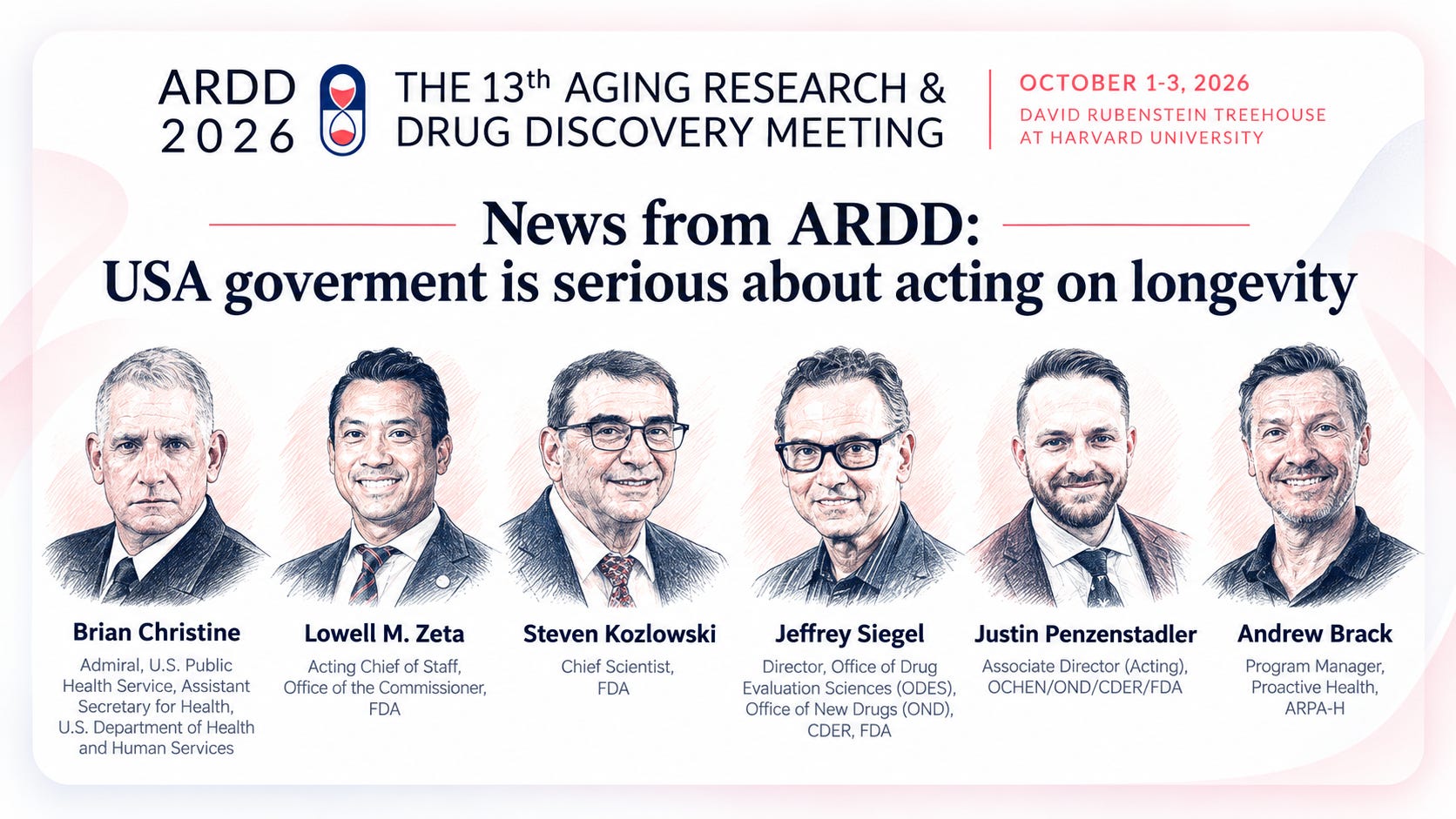
For the first time at a longevity-focused event, a panel of senior FDA officials explicitly discussed potential regulatory pathways for longevity therapeutics. The panel brought together Lowell M. Zeta, Acting Chief of Staff, Office of the Commissioner, FDA; Jeffrey Siegel, M.D., Director, Office of Drug Evaluation Sciences, Office of New Drugs, CDER, FDA; Justin Penzenstadler, M.D., Associate Director (Acting), OCHEN/OND/CDER, FDA; and Steven Kozlowski, M.D., FDA Chief Scientist. The discussion was moderated by Andrew Brack, Program Manager at ARPA-H.
The most consequential announcement came from Dr Kozlowski, who confirmed that the agency is preparing a new document outlining its regulatory-science priorities, with aging and longevity explicitly included:
“Aging and longevity will be in the agency’s focus areas of regulatory science, planned for early fiscal 2027. The FDA is not only a hurdle. One badly misread result can set the field back for years.”
This represents a significant departure from the field’s historical position on the regulatory sidelines. Rather than dismissing aging as too poorly defined to warrant regulatory engagement, the FDA is beginning to treat it as a scientific challenge that deserves a structured approach.
As Dr Kozlowski further explained:
“The Office of the Chief Scientist is here for the science required to translate aging biology into a pathway that encourages development and still assures safe and effective products.”
Importantly, the discussion suggested that formally classifying aging as a disease may not be a prerequisite for progress. Dr Lowell Zeta challenged the assumption that the entire field must first settle this longstanding debate:
“I question whether we need to resolve whether aging is a disease in order to make progress. Going down that track may narrow us into tools that were not designed for this.”
His argument points toward a more pragmatic regulatory strategy: rather than waiting for consensus on whether aging itself constitutes a disease, developers could begin establishing clinically meaningful outcomes that reflect the effects of interventions on age-related functional decline.
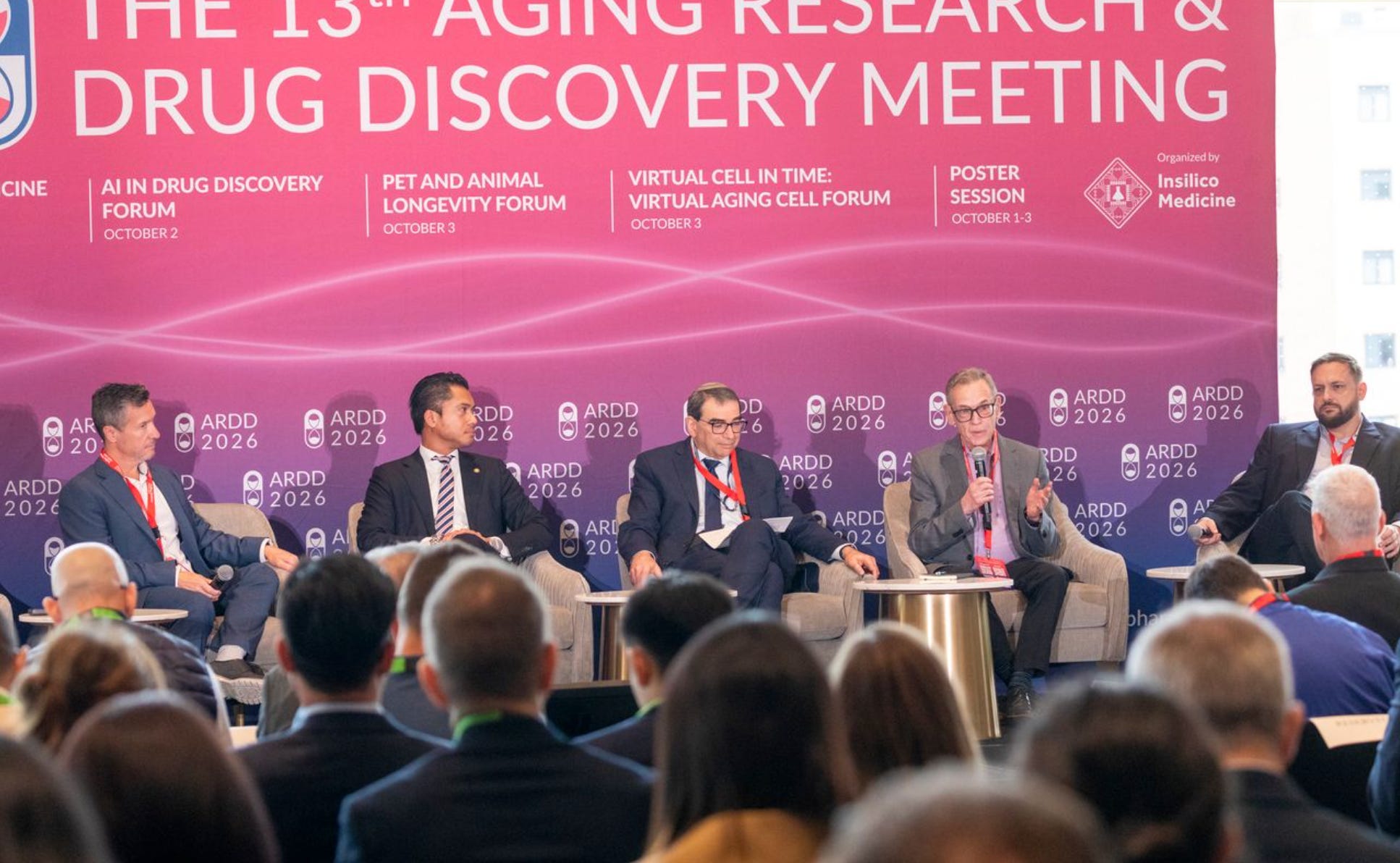
That approach, however, requires much more than showing that a treatment makes a biological clock run backward.
The FDA panel sketched a plausible route toward approval, beginning with hard clinical outcomes, such as the prevention of age-related comorbidities or mortality, in carefully selected older populations. Measures such as intrinsic capacity, functional decline, and multimorbidity could eventually provide more practical endpoints and shorten clinical trials, but only once they are rigorously linked to meaningful clinical benefits.
Dr Jeffrey Siegel drew a crucial distinction between biomarkers that predict aging-related risk and those that could actually support regulatory approval:
“A prognostic biomarker sorts risk. A surrogate must also change with treatment, and that change must reflect later clinical benefit. Define the population, define an outcome across those domains, and show slower progression than control. That could be an indication: effect on how patients function, feel, and survive.”
This distinction matters enormously for longevity biotechnology. A biomarker that accurately predicts mortality or biological age is not automatically a valid endpoint for a therapeutic trial. Developers must demonstrate that an intervention-induced change in the biomarker reliably predicts a corresponding clinical benefit. Until that relationship is established, even the most sophisticated aging clocks cannot independently establish clinical efficacy.
But the FDA officials were not simply outlining obstacles. They were actively encouraging the field to engage with the agency and begin developing the evidence required for new regulatory pathways.
Dr Justin Penzenstadler offered particularly direct advice to commercial sponsors:
”We’re trailblazing for trials and endpoints. The best way to get feedback on trials and endpoints is to send me a send me an IND, send FDA an IND, send a protocol, and we’ll take a look. That’s the absolute best way to interface with FDA for for commercial sponsors”
He also emphasized the need for collective action and real clinical data rather than prolonged theoretical discussions:
“We are the umpire, not the coach. Form a pre-competitive consortium, put the same biomarkers into real trials, and send us a protocol under an IND. Theoretical questions will come back as a review issue.”
The implication is that longevity companies should not wait for the FDA to independently define an entirely new regulatory framework before beginning development. Instead, the field needs to bring concrete protocols, standardized biomarkers, and clinical evidence to the agency so that regulatory standards can evolve alongside the science.
Dr Zeta reinforced that the FDA’s role is not to design the field’s clinical development programs, but to provide a predictable framework for evaluating them:
“We are the umpire, calling balls and strikes. But we also want to give developers predictability. That is where we need your help.”
Together, these remarks point to an important change in the relationship between longevity biotechnology and its regulator. The FDA is signaling a willingness to engage, but it is also placing responsibility on researchers, clinical developers, and industry consortia to generate the evidence needed to establish credible endpoints.
This is not yet recognition of aging as an FDA indication, nor does it mean that biological aging clocks have been accepted as surrogate endpoints for drug approval. But it is a meaningful, milestone-like precedent that senior FDA leadership is now publicly treating aging as a legitimate regulatory-science problem to solve, discussing what an approvable clinical outcome might look like, and explicitly inviting developers to help build the pathway.
For an industry that has spent years wondering whether the regulator would ever come to the table, that alone is a milestone.
Goverment is getting involved in longevity
The FDA was not the only senior government voice discussing longevity at ARDD 2026. Admiral Brian Christine, the 18th Assistant Secretary for Health at the U.S. Department of Health and Human Services (HHS), delivered a keynote address on how advances in aging science could be translated into clinical practice and public health policy.
Admiral Christine is a physician and urologist with approximately 35 years of clinical experience, particularly in men’s health. Appointed under President Donald Trump and serving within HHS under Secretary Robert F. Kennedy Jr., he also leads the U.S. Public Health Service Commissioned Corps, a uniformed service of more than 5,000 public health professionals. His office helps develop, implement, and communicate health policy across HHS, connecting priorities that span agencies such as the FDA, NIH, and CDC.
His message at ARDD centered on a fundamental change in how American healthcare should approach aging: moving from treating individual diseases after they emerge toward preventing multiple chronic conditions and preserving function throughout life.
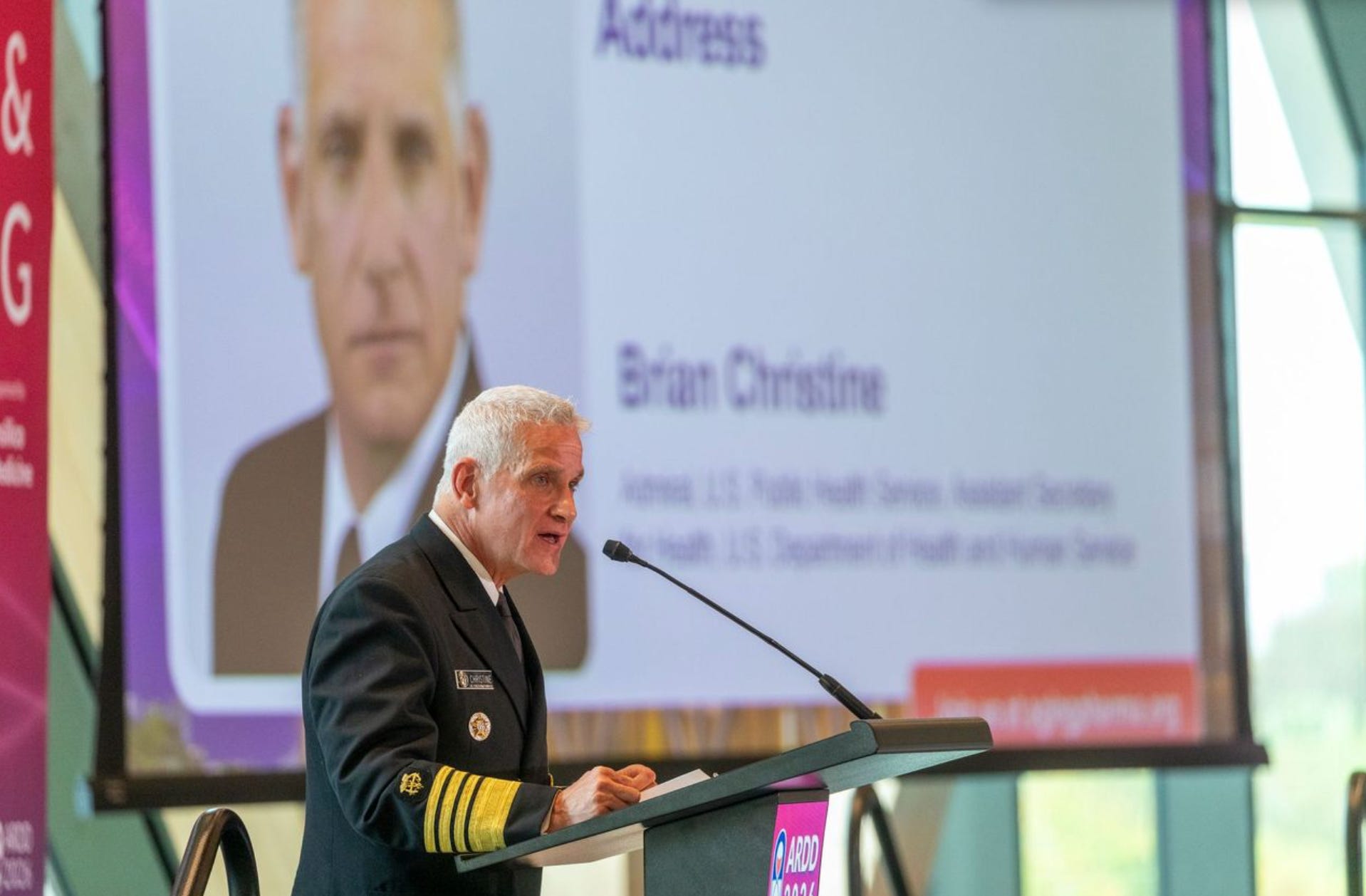
Christine argued that the United States has extraordinary biomedical research capabilities but has struggled to translate scientific advances into population-level health improvements. He described the American healthcare system as reactive rather than proactive, treating hypertension, diabetes, cardiovascular disease, and obesity separately, despite the shared biological mechanisms that often underlie them.
For longevity biotechnology, this creates an important opportunity. If interventions targeting fundamental aging processes can delay several diseases simultaneously, they could fit into a broader healthcare strategy built around prevention rather than disease-by-disease treatment.
However, Admiaral Christine also delivered a clear warning about the growing enthusiasm surrounding aging biomarkers and biological clocks:
“A biological age clock moving backward is interesting, and a biomarker changing is interesting. But interesting is not always the same as clinically clinically meaningful.”
His point echoed the FDA panel’s distinction between promising biomarkers and validated clinical endpoints. Reversing a biological aging clock is not sufficient evidence that an intervention improves healthspan. Researchers must establish whether those changes translate into outcomes patients actually care about: preserved mobility, cognitive function, independence, and fewer years lived with disability.
Christine also addressed the rapidly expanding market for longevity interventions, including peptides, hormone therapies, supplements, biological-age testing, and other products frequently promoted through wellness clinics and social media. While supportive of innovation and reassessing established medical assumptions, he cautioned against allowing commercial enthusiasm to outpace clinical evidence:
“But neither should enthusiasm on social media become clinical practice simply because an intervention is new, exciting, or it’s biologically plausible.”
Equally important was his emphasis on accelerating the translation of credible discoveries into clinical practice. Admiral Christine argued that generating strong scientific evidence is only the beginning. Government agencies, regulators, healthcare providers, and payers must work together to ensure that validated interventions actually reach patients.
“Because evidence, when it’s trapped in a journal, doesn’t improve population health.”
He called for a faster process connecting scientific discovery, replication, regulatory evaluation, clinical guidelines, reimbursement, physician education, and patient access.
Together with the FDA panel, the message from ARDD 2026 was clear: government officials are increasingly willing to engage with longevity science, but the field must demonstrate clinically meaningful outcomes and build the evidence needed to translate promising interventions into accessible, preventive medicine.
Goverment agencies are tying it together: ARPA-H is hunting endpoints
While the FDA discussed what it would take to approve longevity therapeutics, Andrew Brack, Program Manager at the Advanced Research Projects Agency for Health (ARPA-H), presented a government-funded initiative designed to generate exactly the evidence regulators need. ARPA-H, a federal biomedical research agency within HHS, is investing up to $144 million over five years in PROSPR, a program designed to develop clinically meaningful endpoints for aging and test therapeutics that directly target aging biology.
The central challenge is that molecular aging clocks can change quickly but have not been validated as predictors of clinical benefit, while traditional endpoints such as disease incidence and mortality require lengthy, expensive trials. PROSPR aims to bridge this gap by developing a standardized intrinsic capacity score, combining functional measures such as walking performance, lung function, and cognition into a potential clinical trial endpoint. Rather than immediately seeking approval for biological aging clocks as surrogate biomarkers, PROSPR is pursuing FDA qualification of a Clinical Outcome Assessment (COA), which could eventually provide a standardized measure that multiple drug developers can use in longevity trials.
Crucially, this is not just a biomarker-development exercise. The program includes a trial involving approximately 1,200 adults aged 60–75 without the target diseases, investigating whether repurposed drugs, including GLP-1 therapies and dapagliflozin, improve intrinsic capacity. Four additional teams are advancing experimental longevity therapeutics toward early clinical trials, including interventions targeting mTORC1 and LINE-1 retrotransposons.
Eight months into the program, Brack reported that 15 longitudinal datasets had already been integrated, discussions with the FDA about qualifying the functional endpoint had begun, and clinical trial preparations were advancing.
The significance is that the U.S. government is not merely discussing how longevity drugs might eventually be approved: through ARPA-H, it is funding the clinical infrastructure, endpoints, and therapeutic trials needed to make such approvals possible.
Coming tomorrow: The Big Pharma battle for longevity.
Two pharmaceutical giants are racing to become the pioneers of longevity therapeutics and both arrived at ARDD 2026 with human clinical data suggesting their drugs could turn back biological aging clocks (going into Insilico’s Rentosertib’s footsteps?).
Who will emerge as the leader in the race to develop the first generation of longevity therapeutics? And how convincing is the science behind their claims?
Stay tuned for Part 2. The race for longevity has officially entered Big Pharma territory.
Admiral Brian Chrisine is a visionary 🫡