

As you’ve may have seen from multiple social media stories and headlines, at ARDD 2026, Eli Lilly and Novo Nordisk presented new human data suggesting their blockbuster metabolic drugs (GLP-1s) influence biological aging. What was really said? What did we learn from Big Pharma beyond the GLP-1 news (despite it being absolutely crucial)? Executives from Novartis, Moderna, Pfizer, Takeda, and other pharmaceutical companies discussed a broader shift: treating aging as a systemic problem, using AI to accelerate discovery, and confronting China’s growing weight in how drugs get made.
Four years of signals at ARDD
ARDD has a long history of announcements that indicated that big pharma is getting serious about longevity
ARDD 2023 — the strategic discussion begins. Lilly’s Benjamin Yaden and Novo’s Erik Vernet sat with BioAge on a panel titled “Indications for longevity biotech: Pharma partnership for age-related drug discovery.” Both companies were already treating aging as an area for partnership, before GLP-1s became the conference’s main character.
ARDD 2024 — GLP-1 enters the scientific program. Jens Juul Holst, one of the foundational GLP-1 scientists, asked whether GLP-1 receptor agonists could ameliorate the metabolic complications of aging. Marie Kveiborg of the Novo Nordisk Foundation spoke on translating discoveries into the clinic. Lilly’s Jonathan Matthew Wilson joined a panel on sourcing aging therapeutics.
ARDD 2025 — the shift toward organ protection. Novo’s Lotte Bjerre Knudsen gave “Organ Protection with GLP-1 Receptor Agonists,” framing drugs that began in diabetes and obesity and had expanded into cardiovascular, liver, and renal protection: a disease-targeted therapy becoming a broader healthspan intervention. Lilly’s Berthil Clasen joined “How do we advance longevity in pharma in a credible way?”
ARDD 2026 — the “war” begins: Both Lilly and Novo showed human clinical data showing GLP-1s effects on aging clocks.
1. Lilly vs. Novo: the race to lead in longevity therapeutics
The rivalry is usually described in obesity-drug sales, manufacturing capacity, and next-generation incretins. At ARDD 2026 another dimension became visible: which company can generate the more compelling evidence that its medicines affect biological aging.
Both are now investigating the aging-related effects of drugs they already sell. They are doing it with different biomarker technologies and different clinical datasets.
Eli Lilly: tirzepatide and 72 weeks of epigenetic aging
Kevin Duffin, vice president for aging research at Eli Lilly, presented an exploratory analysis of SURMOUNT-5, the trial comparing tirzepatide with semaglutide in people with obesity and without type 2 diabetes.
He opened with the case he thinks the drug already meets. Mounjaro for diabetes, Zepbound for obesity, and organ-level signals behind them: liver, kidney, heart-failure hospitalizations, and all-cause mortality in trials where the comparator was not placebo but dulaglutide, a weaker GLP-1.
“One of the definitions of a good drug, is one that shows improvements in multiple organ diseases. Well, I think we checked the box there. And then another condition for a good drug, is that we should see a reduction in mortality… and we see that too.”
The new piece of evidence is epigenetic. Lilly has not historically banked whole blood at later time points, which is why a company with tens of thousands of tirzepatide patients is only now showing clocks. “That’s on us,” he said, and guessed it was true at Novo too. “We’re all, I think, kind of scrambling a little bit to change our trials out to be able to collect this type of sample for biological aging clocka”
Lilly selected participants over 50, ranging to nearly 80, from a parent trial whose average age was the mid-forties and whose average HbA1c was about 5.6.
Over the 72-week treatment period, participants aged approximately 1.38 chronological years. The question was whether their biological age, as estimated by epigenetic clocks, followed the same trajectory. According to Kevin Duffin, the results suggested otherwise. Across multiple clocks, epigenetic age increased more slowly than chronological age, and some clocks even showed an absolute decrease. The magnitude varied considerably: first-generation clocks showed relatively modest effects, which Duffin described as around half a year less aging than expected, while some second-generation clocks showed larger effects exceeding 1.5 years relative to the expected trajectory. Measures of the pace of aging, including DunedinPACE, also declined. Two independent laboratories, Zymo Research and TruDiagnostic, produced broadly consistent findings. However, these were preliminary results from the tirzepatide arm alone, without a presented comparison to semaglutide or an untreated control group. As Duffin emphasized, some clock signals remained inconsistent, and the findings should be considered hypothesis-generating rather than proof that tirzepatide slows aging.
Duffin put the magnitude in perspective:
“All the clocks are telling a consistent story that we’re seeing a reduction in age. It’s not the panacea. It’s not like we’re going to reduce age by 30 years or something, but it’s a significant reduction.
The organ clocks offered another intriguing result. Of the organ systems assessed, only the lung showed an increase in predicted epigenetic age, which was not statistically significant. The heart, immune system, kidney, and liver showed decreases, broadly consistent with the clinical benefits Lilly has observed across these organ systems in its trials. Duffin was particularly interested in whether DNA methylation could predict measurable clinical changes. In several cases, it did: methylation-derived estimates were consistent with observed changes in BMI, waist-to-hip ratio, HbA1c, fasting glucose, triglycerides, LDL particle size, HDL particle size, apoA1, and HDL cholesterol, sometimes even approximating the magnitude of those changes. But the predictions were not universally accurate. For sex hormone-binding globulin, a TNF receptor, and BCAM, methylation-based predictions suggested an increase, whereas the measured protein levels actually decreased. This highlighted both the potential of epigenetic profiling to inform drug development and the limitations of treating methylation-derived estimates as substitutes for clinical measurements.
“The epigenetics is not perfect yet, and I think the clocks still have to do some refinement to make sure that they really do align with the real clinical data.”
He also said the substudy was small, some clock signals were discordant, follow-up was short for a chronic drug, and the clocks were not trained for treatment or for the same patient over time.
“I look at this as hypothesis generating. It’s not like, oh, the clock says this, and so that’s what it is.”
For now the findings support further measurement. They are not a claim that tirzepatide has been shown to reverse human aging. The competitive tell was the withheld arm. Lilly has the only head-to-head the market actually cares about, and did not open it.
Eli Lilly’s other SURMOUNT-5 dataset: proteomic organ age
Duffin pointed the room at a second analysis he did not give from the podium. Poster 13, “Organ-Specific Proteomic Age Changes in Adults with Obesity Treated with Tirzepatide,” is Corey James, Yanzhu Lin, Kevin Duffin, Colm O’Dushlaine and Axel Haupt. It is Olink plasma, not methylation, and it uses the Goeminne 2025 organ-specific and conventional proteomic clocks. It is also a different population from the over-50 epigenetic slice.
SURMOUNT-5 randomized adults with obesity, without diabetes, 1:1 to maximum tolerated tirzepatide (10 or 15 mg) or semaglutide (1.7 or 2.4 mg) for 72 weeks. The poster’s proteomics cohort is 301 randomized to tirzepatide and 297 to semaglutide, mean age 44.9 ± 12.9 and 44.7 ± 12.5, BMI 39.3 ± 7.2 and 39.5 ± 7.8, 64 percent women in both arms. Week 72 proteomics were available for 259 and 252. The published trial result cited on the poster is the one the market already knows: 20.2 percent weight loss on tirzepatide versus 13.7 percent on semaglutide at 72 weeks.
Predicted age tracked chronological age in the tirzepatide arm (r = 0.90, MAE = 6.0 years, n = 301) but with a systematic +4.5-year offset. Limits of agreement were −6.8 to 15.9 years. The offset was not a function of age in this cohort (r = 0.09, p = 0.134). Age acceleration was the residual from that fit. The gap between extreme quartiles was 10.17 years. Those quartiles separated on brain, pituitary and artery organ age. They did not separate on muscle, heart or lung. That is a different organ map from the epigenetic slide, where heart, immune, kidney and liver moved and lung did not.
Within the tirzepatide arm, seven of 18 organ and conventional clocks decreased significantly from baseline to week 72, referenced against the same 1.38 years of elapsed time. Semaglutide n is on the poster for trial context. The organ-age change figures are within-arm tirzepatide only. There is no placebo.
The poster’s own warning is the one the epigenetic talk did not have. ELN was the top-weighted protein in the artery clock and its strongest correlate with predicted age (r = 0.85). It rose more in people who lost more weight (r = −0.18, p = 0.003, n = 259) and was unrelated to systolic pressure at either visit. The authors say the artery clock in this cohort may be weight-loss-driven elastin turnover, not arterial aging. Blood pressure still diverged between the age-acceleration groups: 128.01 mmHg versus about 122 at baseline in accelerated versus decelerated agers, and 119.49 versus 109.57 mmHg by week 72, a gap they put at 9.92 mmHg.
Novo: Semaglutide across five trials and multiple organs
Alejandro Aguayo-Orozco framed it as the question the meeting had been circling. Pharma tests medicines one disease at a time.
“If we’re touching so many diseases, are we actually also touching something that is systemic across these diseases? Is it aging? Is it healthspan?”
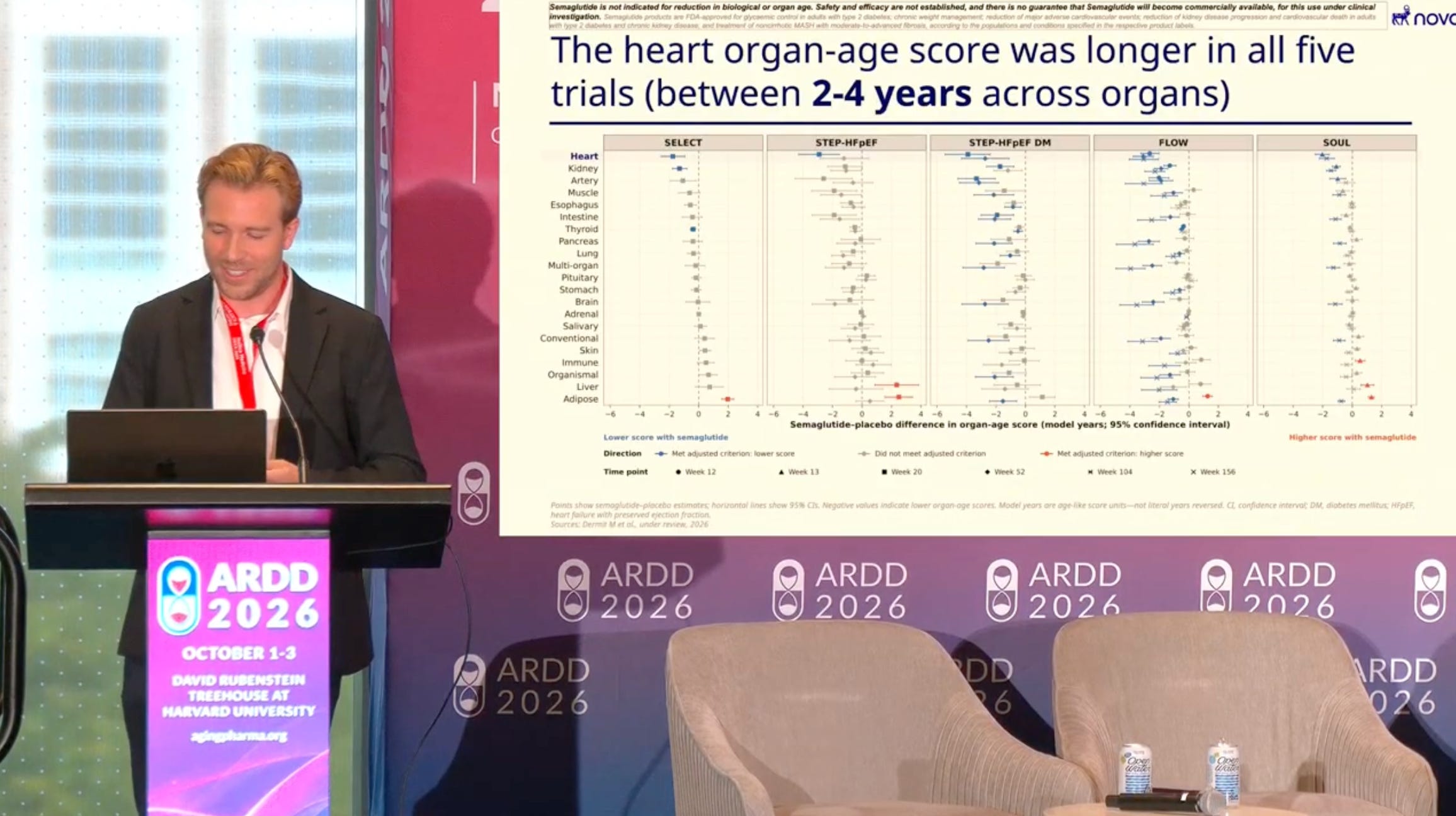
His case for potential longevity effects of GLP-1 rested on how it works. It is both a gut hormone and a neuromodulator, released after a meal and also made by neurons in the brainstem. The receptor is not everywhere, the way the insulin receptor is; it sits on specialized cells across many tissues.
“When we activate the system pharmacologically, we’re not just simply flipping a switch. We’re actually creating a cascade of information and activities across these different organs. And that’s the kind of reach I think one would want to have if we want to influence healthspan and aging.”
It is also, he said, why a single clinical endpoint is hard to pin on one mechanism. Weight and appetite matter, but so do natriuresis, vascular function, blood pressure, and the liver. A major adverse cardiovascular event is unlikely to be any one of those alone. He organized the talk as four tests. The first was disease. Across five randomized trials and almost 32,000 patients treated for up to five years, he walked through a 20 percent reduction in major adverse cardiovascular events in a population without diabetes, better symptoms and six-minute walk distance in obesity-related heart failure with preserved ejection fraction, a 24 percent lower primary kidney composite in FLOW (stopped early for efficacy), and a 14 percent lower MACE rate with oral semaglutide in SOUL. Gastrointestinal effects were the most common adverse events, generally mild or moderate.
The third test, survival, was the one he treated as the integrative endpoint.
“If semaglutide was acting on aging, we would also expect to see an effect on the most integrative endpoint of all, all-cause mortality, not only cardiovascular related mortality.”
Pooling six outcome trials and more than 38,000 patients, he reported an 18 percent reduction in all-cause mortality. Encouraging, he said, not definitive.
The fourth test was biology. In up to about 10,000 patients with Olink proteomics, roughly one-to-one against placebo and followed from four months to three years, organ-age clocks moved. Heart and kidney scores were lower on semaglutide than placebo at the first measurement in all five trials, across two formulations and three doses. Other organs were mixed early and more consistently lower later. An early rise in an adipose clock looked, in the Q&A, like remodeling during the period of fastest weight loss — leptin and related proteins — and later flattened or reversed. A proteomic frailty score did not move early, then was lower from one year onward in every trial. He was clear that this is not grip strength.
The obvious objection is that GLP-1 drugs make people eat less. Mediation plots for the heart and kidney clocks, he said, did not show the shift running through weight change, glucose, or hsCRP.
“The effect that semaglutide has on reducing these clocks compared to placebo is not mediated by these three parameters… They’re seeing something different.”
He immediately narrowed that claim: it is not proof the effect is independent of weight loss, only that those three measures are not what the clocks are registering. In the Q&A he said individual proteins do show weight-mediated effects, especially early, and that later organ-age benefits still did not appear to be explained by weight change at one year and beyond. A heart-clock reduction mediated up to 40 percent of the cardiovascular-death reduction and up to 36 percent of the all-cause mortality reduction, and less of MACE.
2. Novartis: why regenerating tissue is not a longevity drug
While Lilly and Novo presented biomarkers, Novartis offered the scar tissue. Fiona Marshall, president of biomedical research, used the company’s Diseases of Aging and Regenerative Medicine group, DEAR, to explain why one pathway and one tissue is no longer the plan.
“Our aim is not to extend the natural lifespan, but very much focused on targeting pathways of aging as a major risk factor for the core disease areas that Novartis already is interested in.”
Two programs, both taken to phase 2, made the point.
LNA043 was built to reawaken fetal cartilage development in osteoarthritis. A phenotypic screen produced an angiopoietin-like peptide. In patients undergoing autologous cartilage implantation, MRI showed defects filling against placebo. In established osteoarthritis, MRI again showed cartilage coming back. Commercial colleagues then said nobody would pay for a prettier scan.
“What you actually needed was less pain… and by the way, there’s already pain drugs, so it has to be better than the existing pain drugs. And you would also want improved mobility. Unfortunately, although we were able to see regeneration of cartilage in the knee, that did not correlate with improved pain scores or improved function. You could repair the cartilage, but the underlying disease was still there.”
Bimagrumab, an activin-receptor antibody, grew muscle. In a cast-immobilization proof of concept, lean mass came back once the cast came off. In sarcopenia patients, mass did not become mobility, and it did not become less frailty.
“It wasn’t just about regrowing cartilage. It wasn’t just about regrowing muscle. You had to think of this in the context of the whole system… You probably needed more exercise. There were behavioural things. You probably needed nutrition changes. It’s not just about regeneration. We must think much more about resilience.”
Single drugs against individual aging pathways, she said, are not going to work. The goal is a regenerative medicine plus something that stops the process that ate the tissue, timed before degeneration is the disease, with an endpoint a payer already understands. Healthspan, in her definition, is dull on purpose: still mobile, still cognitively intact, still able to work. Her mother died in her nineties with “old age” on the certificate. “Which is something I aspire to.”
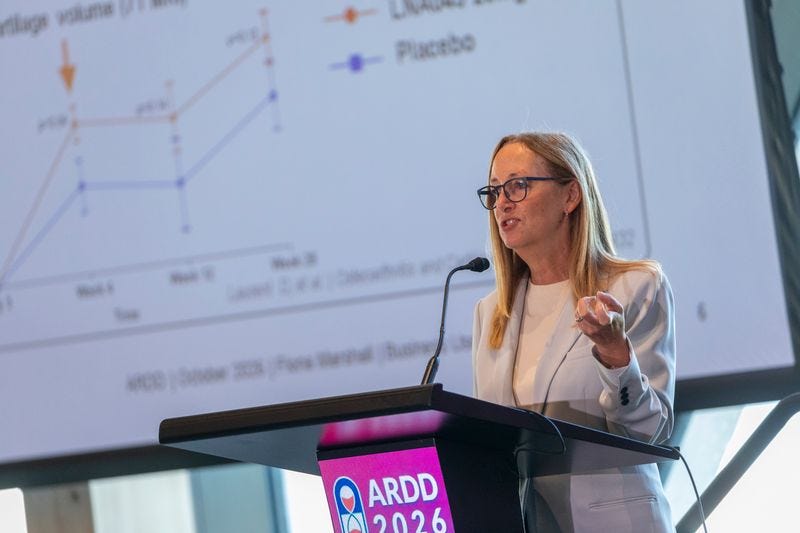
The positive control she held up was not a Novartis molecule. It was exercise. She argued the Alzheimer’s curve for high daily activity is in the range of APOE4, maybe past it. The trap is circular. Osteoarthritis and sarcopenia are why older people stop moving, which is why their Alzheimer’s risk then rises.
DEAR’s method from here is longitudinal human data. Novartis has stacked decades of trials, including cardiovascular outcome studies and Alzheimer’s programs, into an internal store called Data42. CANTOS, the canakinumab inflammation trial, is the example she likes: a cancer signal too heterogeneous to confirm, then a proteomic signature, from collaborator Charlie Swanton, that might have shown which lung cancers inflammation was driving. The next layer is other people’s data and a collaboration with BioAge on the exercise response as a source of targets. Animal models, she said, can show a pathway. They are a bad description of human aging, and almost none of them get Alzheimer’s.
A cross-disease group is already building foundation models, kidney first, then neurodegeneration. She wants aging data dropped into those models rather than kept in a longevity silo.
The lesson is the counterweight to the clocks. A patient does not benefit because an MRI shows more cartilage. A person does not benefit because a blood algorithm prints a younger age. The question is whether they are healthier, more functional, or less likely to develop serious disease.
3. China’s biotechnology acceleration is no longer a slide at the back
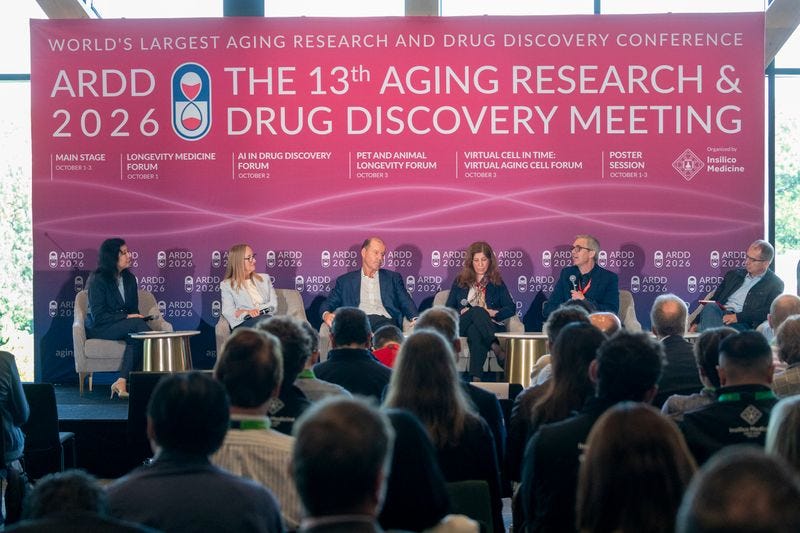
One of the most unexpected discussions by Big Pharma for me was not about drugs, but about China. The panel moderated by Alice Park of TIME included Stéphane Bancel, CEO of Moderna; Fiona Marshall President of Biomedical Research at Novartis; Ariel Feldstein, Pfizer’s chief scientific officer for internal medicine,; Christophe Weber, former chief executive of Takeda, and Elcin Barker Ergun, chief executive of Menarini.
Stéphane Bancel: the U.S. needs to wake up on trials
“We need to wake up on clinical trials. When you spend months negotiating with Harvard and then going to negotiate with Yale, and everybody has their own thing, but going to China, it’s the same thing for everybody… We don’t see a lot of lawyers when we go to China to negotiate a clinical trial.”
Dr Bancel was explicit that speed is not a license to cut safety. “None of us wants to cut a corner on safety.” The waste, in his telling, is repeating the same negotiation at every hospital. Asked what he was most wary of conceding:
“Betting against China is a very arrogant strategy. If you look at what they are building… people are smart, well educated, they work really hard, and you give it some compounding, and you know how this story finishes.”
He also pointed at two combinations Moderna is actually looking at, both of them lifestyle plus a drug: exercise multiplying vaccine response in older people, and fasting-mimicking diets before chemotherapy or checkpoint blockade.
Christophe Weber: AI plus China is a flood, and trials are the dam
“If you add the AI dynamic plus China, we will never have seen so many molecules in the history of pharma. The challenge, and somehow the bottleneck, is the clinical trial.”
China, he said, is not yet consistently first-in-class. It is already very good at best-in-class on a known target. The data are strong. A China-only trial still may not reproduce in a U.S. population. The old consolation, that China engineers and the West discovers, is the one he told the room to retire.
About 30 percent of drug failure, he said, is the trial rather than the molecule: underpowered, sites not run the same way, the wrong patients. AI can design a better study. It cannot enroll it. His guess was that R&D productivity more than doubles in five years, and that the new scarcity is which molecule you pick.
On prevention as a business, he was structural rather than scientific.
“If we are serious about prevention and aging, it should create a completely different paradigm. The issue right now is the same FDA managing treatment and prevention, the same healthcare systems, the same physicians — but it’s a totally different paradigm.”
Menarini, Pfizer, Novartis: use the science, keep the scientist
Elcin Barker Ergun described the other half of the compression. Working with Insilico Medicine, Menarini took an epigenetic target and a second oncology molecule from a ten-to-fifteen-year discovery cycle into two or three years. They are in the clinic. A 4,000-patient adjuvant breast cancer trial finished in 18 months, mostly because patient-finding finally caught up with protocol writing.
Ariel Feldstein’s caveat was the one the builders usually skip. The models are not short of data. They are short of the right question, and the scientist has to stay in the loop. “The co-scientist approach is the way we see it.”
Asked about Novartis licensing a Chinese CAR-T after suspending eight of its own CAR-T trials, Marshall declined the framing.
“We’re a global company. We go where there’s good science and good assets… we are indeed increasingly seeing that in China, with additional clinical data. That’s what we get excited about.”
Mark Cobbold, who builds AstraZeneca’s cell therapy business, thought the aging version of this race also tilts to China: the scale of the scientific workforce, ten- and twenty-year plans, life sciences named a national priority, and a one-child generation about to look like Japan’s age structure. His own conversion was an in vivo CAR-T dataset he was sure would fail, because the textbooks said you needed lymphodepletion. The first patients expanded anyway, on a par with autologous CAR-T. If aging turns out to be an epigenetic or genetic change rather than a missing small molecule, “we’re starting to have the tools… at the moment everyone focuses on small molecules. I don’t quite know why.”
China is no longer being discussed as a manufacturing site or a cheap place to run a study. Executives are treating it as a source of assets, capabilities, and partnerships. They also said a China-only dataset may not travel. The strategic point survived that caveat.
4. What’s the current reality for not Big Pharma drug developers?
The licensing panel also took the business-model question: if companies succeed at preventing age-related disease, what happens to a model associated with treating people after they are sick?
Jonathan Levy, senior director of strategy, at Astra Zeneca put the language problem first. “If a company is coming to us and saying there’s validation, or this is a validated target or a validated drug, it needs to be very specific what you’re talking about.” A screen, a single-cell clock, a proteomic signature, a senescence pathway that might touch fibrosis: none of that is validation in the sense a partner can underwrite. Nikolai Kulahin, a global project lead at Novo, was blunter about the bar. A compound that reduces senescence in a dish is not enough. A compound that prolongs life in mice, mechanism unknown, is not enough. Genetics help, because they let you look across traits, but the conversation always rotates back to therapeutic efficacy inside an established area. Longevity, he noted, is not a disease, so the asset still has to be packed into one (Dominika here - it might be changing - see the previous post on the Goverment). He also drew the healthspan line the field keeps dodging:
“We’re not necessarily wanting to give people more life. We would rather ensure that they have a better quality of life at the end.”
Avi Spier, in business development and licensing at Novartis, refused the idea that proof of concept is a single experiment. Companies arrive saying they have efficacy and safety and then cannot understand why he is not excited.
“What I’m looking for is proof of concept that this is going to do all of that and beat the competition and be the best standard of care.”
Genetic evidence, a translatable mouse model, a tool compound that does exactly what you say it does: any of those can count, if they support a target product profile worth an investment. David Berry, managing partner of Avren Capital and a former Flagship general partner, came at the same word from the other side of the table.
“I’m not looking for the coolest science paper. I’m not looking for the prettiest graph. I’m looking for a way where I can put a certain amount of money in and generate a return, usually at least tenfold.”
Pharma, in his telling, is hunting two things at once: the next ten-billion-dollar drug, “where’s the next GLP-1,” and drugs so predictive that today’s data makes the next stage feel inevitable. “Proof of concept is how do we prove that this is ten billion dollars, or how do we prove that it’s really predictive.”
Claris Munksgaard, director of business development and licensing at EMD Serono, described what a package has to survive. Pharma does “excruciatingly exhaustive” diligence: data rooms, patient-level data, its own analyses, sometimes an audit before signature. The failure mode she sees most is biologists picking the in vivo model that tells the best story. Parkinson’s alone has roughly ten. “Choosing certain in vivo models that perhaps give them the best story to tell, and maybe the best data to show, actually does more harm than help.” She wants the gold-standard model, clean PK and safety, target engagement, a flicker of efficacy, and above all differentiation. She also wants an early FDA conversation, even when it is not required, and a development plan that can actually earn the label you are selling. Commercial logic bites earlier than founders expect. A molecule aimed at a rare oncology price and a broad immunology price cannot have those revenues added together. “They cannot be both an expensive and a lower-cost drug,” so the paths are alternatives, not a sum.
On fit, the panel inverted the usual late-stage wisdom. Berry argued culture matters more before the clinic, because a late asset often sheds its people within a year, while a preclinical partnership is “tying basically a wedding knot for five years.” Milestones someone else controls are deferred compensation. If you do not trust them to run the work, pay you, and not “weasel” around the letter of the agreement, the structure is a problem. Levy added that joint steering committees outlive the close, plans break, and the industry is small enough that the relationship follows you.
The takeaways were practical. Claris Munksgaard: “talk to the FDA early, and talk to pharma early, even when you are two years out. Pharma moves slowly, like an aircraft carrier.”
Berry: sell what they already want to buy.
“Everyone will tell you exactly what they want to buy. Often what you find with founders is that they are so stuck in their way. Persistence is the number one feature of a founder. But if you’re trying to sell something that a pharma doesn’t care about, they’re going to continue to not care about it after you leave the room.”
Spier asked founders to map the competitive field better than the partner can, including the quiet problems in rival programs. Levy’s version of the same plea was Jerry Maguire. He sees hundreds of non-confidential decks a year. “Help us do our job. Make my job easy.” A deck that notices three Phase 2 drugs already in the pipeline and explains the combination biology will get read. A deck that says “maybe this is interesting” will not.
On intellectual property, Berry was the least diplomatic. Partners will not always say it first, but “IP is the most important thing,” because if diligence finds a hole, they do not need you. Put the value on a silver platter, in the indications they already spend time on, and do not skip the boring assays. He described starting Seres Therapeutics, showing 29 of 30 patients clinically cured in Phase 1, and still being asked for the mouse data. “Last I checked, we were developing drugs for people. You may have cutting-edge stuff. Make sure you have both your cutting-edge stuff and the boring old-school stuff.”
Phil McGurk said that aging still carries biology risk and regulatory risk. There is no agreed endpoint. There is no crowd of bidders.
“Doing a deal that’s focused on longevity, you’re taking on an enormous amount of risk, and whenever we’re taking on an enormous amount of risk, we don’t want to pay a lot up front.”
What ARDD 2026 actually changed
There is a certain irony in the fact that some of the most compelling evidence for pharmacologically influencing biological aging is now coming from drugs that were never designed to target aging in the first place. Perhaps this tells us something about the limitations of organizing medicine around diseases rather than the biological processes that connect them. But it also raises an uncomfortable question for the longevity industry: if drugs developed for conventional indications can demonstrate benefits across multiple age-related conditions, what must a therapy developed specifically for longevity prove to justify its existence? A younger biological-age score will hardly be enough. It will need to deliver something that existing medicines cannot, whether that is preventing diseases before they emerge, restoring lost function, or extending healthy life in people who are not yet patients. The difficulty is that our pharmaceutical and regulatory systems are exceptionally well equipped to recognize and reward the treatment of disease, but much less prepared to value the preservation of health. This is not merely a scientific problem; it shapes which experiments are funded, which endpoints are measured, which companies receive investment, and ultimately which medicines are ever developed. The next chapter of longevity biotechnology may therefore depend as much on rethinking the incentives and evidence standards of medicine as on discovering new aging pathways. The best ending quote is the one by Dr Kevin Duffy:
“I see many companies that are trying to develop aging programs and aging drugs. Novartis, and Novo, and many of the others. I say, bring it on. We’re ready for it. We will compete with you.”
We’ve discussed FDA and goverment in part 1, Big Pharma in part 2; Subscribe for the biggest scientific news from ARDD 2026 in the coming days!